This article was also published in REDESCover, DDIA’s weekly newsletter. Click here to subscribe and get the next edition delivered straight to your inbox.
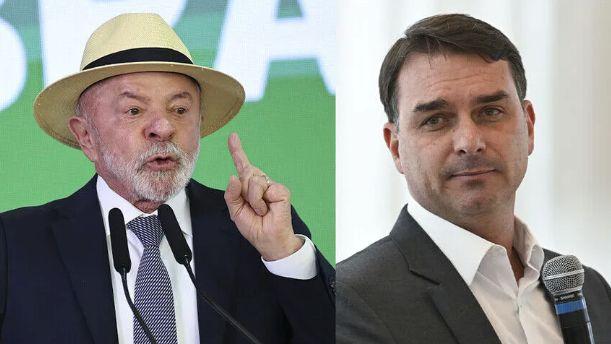
Brazil heads into Sunday’s (October 4) presidential election deeply polarized, with high rejection rates for both leading candidates: President Luiz Inácio Lula da Silva, of the left-wing Workers’ Party (PT), and Senator Flávio Bolsonaro, of the right-wing Liberal Party (PL) and son of former President Jair Bolsonaro.
Lula, 80, founded the PT and is seeking reelection. A former metalworker and union leader, he governed Brazil from 2003 to 2010 and returned to the presidency in 2023 after defeating Jair Bolsonaro.
Flávio, 45, is a senator from Rio de Janeiro, lawyer and businessman who previously spent 16 years in the state legislature. He is running for president for the first time, carrying the Bolsonaro family’s conservative political project into another national election.
But Brazil’s final campaign days have been shaped by far more than traditional debates over the economy, public security or social policy. Voters are navigating a major corruption scandal potentially involving a banker and prominent Supreme Court justices, religious disinformation, distorted statements about women and children, allegations involving sex workers and expensive gifts, and a sudden government crackdown on online gambling.
For DDIA’s U.S. audience, however, one issue deserves particular attention: the role of the United States in Brazil’s election.
In this first article of a three-part series, our researchers examine evidence of possible U.S. influence or interference -- and how it may extend beyond conventional diplomacy and political engagement.
Read part one below and parts two and three for a closer look at the other controversies defining the final days of the campaign in Brazil.
What role is Washington playing in Brazil’s 2026 election?
Questions about U.S. influence have become part of Brazil’s presidential campaign. Brazilian intelligence has warned about possible American interference, major news organizations have uncovered plans by a U.S.-linked conservative network to expand into Brazil, and Democratic lawmakers in Washington have challenged the Trump Administration’s recent actions toward the country.
But an important distinction remains: U.S. diplomatic and economic pressure on Brazil is documented. Evidence that the U.S. government or American organizations have illegally intervened in the election (including by financing a presidential campaign) has not been established as of October 1.
The concerns intensified after the Trump Administration raised tariffs, canceled visas and sanctioned Brazilian officials, including Supreme Court Justice Alexandre de Moraes, over what U.S. officials have characterized as censorship targeting conservative voices on social media.
Brazil’s intelligence agency, Abin, has treated the issue seriously enough to circulate a confidential assessment warning about possible American influence or interference. On September 30, Reuters reported that Brazilian intelligence officials had also briefed representatives from France and Germany about alleged U.S. interference. The State Department, which had previously denied trying to interfere in Brazil’s election, did not respond to Reuters’ request for comment about the briefing.
The concern has also reached Washington. On September 24, 31 Democratic members of Congress wrote to Secretary of State Marco Rubio criticizing the administration’s actions and calling on the United States to respect Brazil’s election results and maintain normal relations with whoever wins.
Diplomatic relations are already strained. The United States currently has no ambassador in Brasília. President Trump nominated Florida politician Daniel Perez, but announced the choice before Brazil granted the customary diplomatic approval, known as agrément. The move was described as “bizarre” by Brazilian officials, and Lula said he would consider the nomination only after the election.
The Rockbridge question
The most sensitive allegations, however, involve the Rockbridge Network, a private conservative organization co-founded by Vice President JD Vance and businessman Chris Buskirk.
Folha de S.Paulo obtained documents describing plans for a Brazilian operation involving media, youth training and legislative activity. The materials also included membership proposals seeking annual contributions of $500,000 or $1 million to Rockbridge Brazil LLC in exchange for access to meetings and strategic discussions.
The controversy escalated when presidential candidate Renan Santos, a right-wing rival of Flávio Bolsonaro, alleged that Rockbridge had financially supported Bolsonaro’s campaign. The accusation triggered calls for an investigation and has reached Brazil’s Supreme Court.
But the campaign-financing allegation remains unproven. People identified by Folha as potential intermediaries denied involvement in foreign campaign funding, while Rockbridge said its Brazilian project never became operational and accused others of misusing its name.
That distinction is central to DDIA’s assessment. There is documented evidence of growing U.S. political and economic pressure on Brazil, as well as evidence that an influential American conservative network explored establishing an operation there. But, as of October 1, specialists have not identified concrete evidence that U.S. actors illegally financed or otherwise directly intervened in Brazil’s presidential campaign.
With the election days away and Brazilian authorities examining the allegations, this is a developing story DDIA will continue to track closely.